
Body Image and GLP-1s - Navigating the Controversy
Jul 10, 2026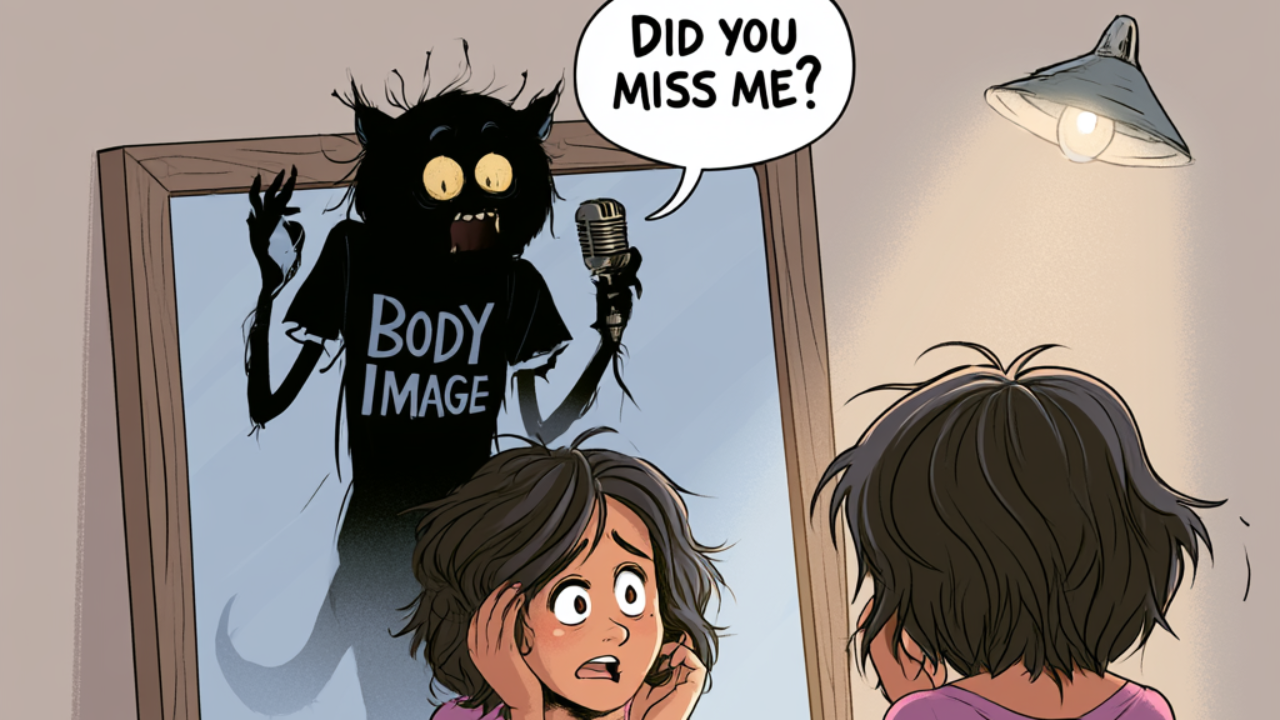
Lately, I’ve been having more negative body image moments and I'm slightly embarrassed to admit it out loud. The voice in my head is telling me that I should be better but I also have learned that I’m human and not exempt from any of these feelings or thoughts. I’ve been feeling more instances of catching myself standing in front of the mirror, doing the old-school inventory: arms, belly fat, thighs, the works, and thinking “why are these thoughts coming up more often right now? I thought I had this body image monster under control.”
I've spent over two decades in the fitness and wellness industry. I have watched women who have the “ideal” body other women covet break down in front of me, asking how they can change their bodies. I have coached clients who hit their "goal weight" and felt exactly as unworthy as the day they started. I know, with the kind of certainty you only get from doing something for twenty-plus years, that the size of your body and the peace in your head are not roommates. They barely know each other.
And yet. Here I am, negative voices dialed up louder than they've been in years, standing in the exact spot I thought I'd already worked myself out of, wondering “why?”
I don't think I'm the only one and I especially don't think I'm the only one in midlife feeling this. Perimenopause and menopause already shake up your relationship with your body without your permission: things shift, distribute differently, stop responding to the routines that you felt used to work. Layer a "just take this and it'll sort itself out" option on top of that particular vulnerability, and it's no wonder the volume goes up.
For the last few years, a lot of us were finally, gloriously, getting somewhere with body neutrality. We were learning to talk to ourselves like we'd talk to a friend. We were unfollowing accounts that made us feel small and following ones that made us feel like a whole person who happens to have a body, rather than a body that occasionally produces a person. Hard-won progress and wins.
Then GLP-1s showed up, and suddenly the thing we'd spent years convincing ourselves didn't matter, thinness, became available. Achievable. One prescription away and that changes something in the nervous system that no amount of "I'm working on my mindset" fully protects you from.
Here's the part I find fascinating, in a slightly infuriating way: it's not that these medications made us insecure. It's that they took an old, familiar fantasy –the "if I were thinner, everything would be easier" fantasy–and moved it from the shelf marked impossible to the shelf marked doable, and our brains are wired to reach for doable. Proximity makes a lie feel truer. The closer the carrot gets, the louder the voice arguing that maybe it isn't a false narrative after all.
What makes things even trickier is that, no matter how you land on this, someone's ready to judge you for it. Take the medication, and you might get side-eye for "taking the easy way out." Skip it, and you might get side-eye for "letting yourself go" or being self-righteous about your restraint. Either way, women end up explaining themselves for a decision about their own body — which is exactly the opposite of the judgment-free space we should be building around this. Nobody owes anyone an explanation for using a medication, and nobody owes anyone an explanation for not using one either.
Except it is a false narrative. And I promised you no-nonsense, not just vibes, so let's actually look at the evidence for a second.
A 2025 study published in the journal Body Image, asked young adults about their body image and their interest in trying GLP-1s. The people most drawn to the drugs, even knowing the side effects, were the ones already carrying the most body shame, the most weight-related anxiety, the most anti-fat bias, and the least "body appreciation" going in. Meanwhile, people with strong body appreciation showed less interest, regardless of side effects. In other words, the drug doesn't create the wound. It gets aimed at one that's already there and the researchers flagged real concern that for anyone with a history of disordered eating, chasing that fix can make things worse. The ANAD recommends working with a healthcare team that understands eating disorders when considering these medications.
I'm not the only one noticing the cultural shift either. A national survey by Virta Health found that 64% of Americans think the sheer popularity of these drugs is bad for the body positivity movement and among Gen Z, that jumps to 72%. Although these numbers are not from a peer-reviewed study, they show me that this feeling I’m having isn't a fringe feeling. Something in the collective nervous system noticed at the same time mine did.
Federal survey data shows that about 1 in 8 U.S. adults were on a GLP-1 for weight loss by late 2025, up from roughly 1 in 17 just the year before. That's not "some celebrities and a few early adopters." That's your group chat, your gym, your sister-in-law at Thanksgiving. The carrot isn’t just closer; it’s mainstream.
I’m not here to say that weight-loss medications are bad because they are not; they are game changers for many people and I support everyone’s choice to do whatever they want regarding their own bodies. The point I’m making is merely in relation to body image and what I know to be true and the research backs me up on this: body dissatisfaction is driven less by the number on the scale and more by how much a person has absorbed the belief that thinner equals better, and that holds true in bodies of every size, not just larger ones. Change the body, leave that belief untouched, and the belief just finds a new mirror to stand in front of.
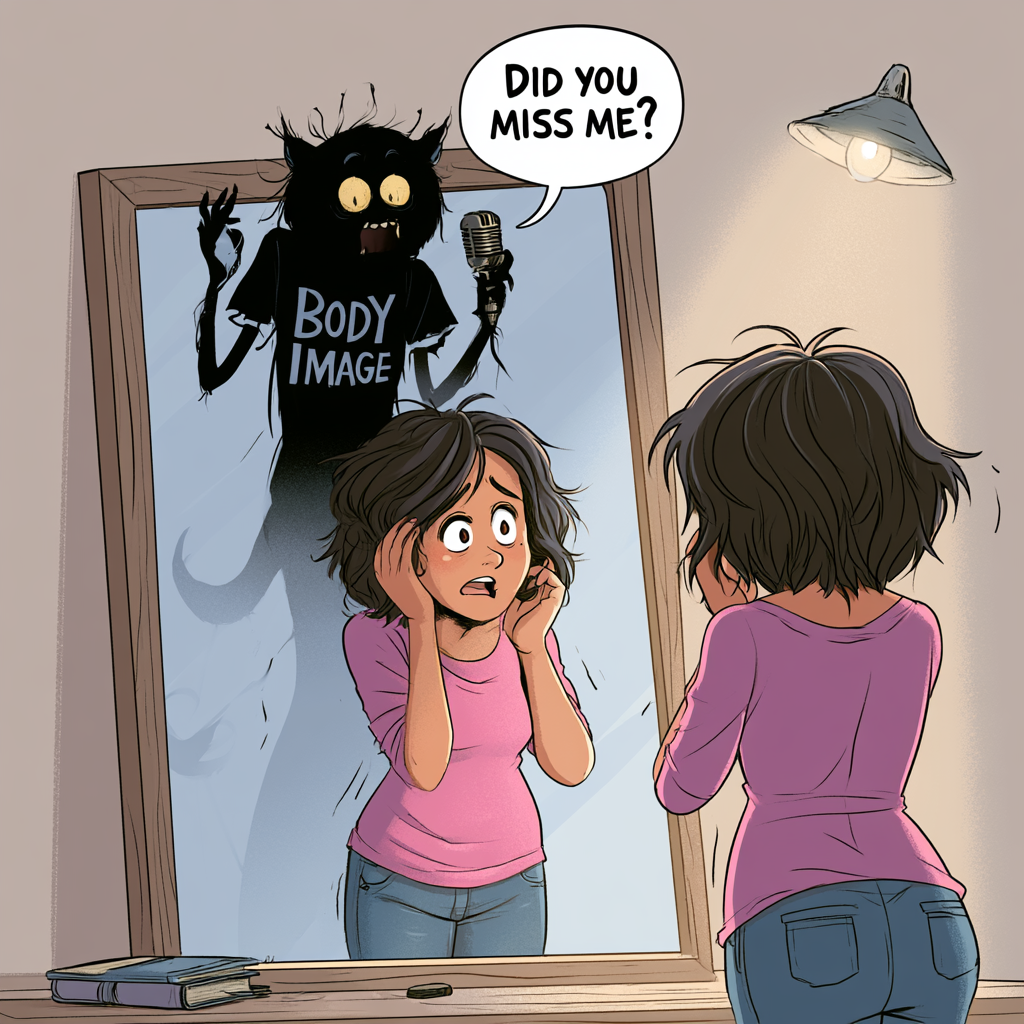
So this is me, raising my hand first: my body image monster has been loud lately. Louder than it's been in a long time. Not because I lack tools, or education, or two decades of professional receipts proving thinner isn't the answer but because the culture just handed that old monster a microphone, a prescription pad, and a really compelling talking point. I know that I'm far from alone in hearing it.
I'll also repeat this, because it’s something I’ve felt passionate about for many years now and because "body neutrality" can start to sound like a finish line you're supposed to cross once and never look back: some days I nail it, and some days the monster wins the argument. Neutrality is not about never having a bad body image day again — it's about not needing a good one to feel like a whole person.
If any part of this is landing for you — if you thought you'd made peace with your body and then this whole GLP-1 conversation stirred the pot right back up — I want to hear about it. Not because misery loves company, but because I think there's real relief in finding out you're not the only one white-knuckling it through this particular moment. This is a judgment-free space, whatever your choice has been: on the medication, off it, thinking about it, done with the whole conversation. Your experience counts either way, and sharing it might be exactly what helps someone else feel less alone in theirs.
I also shared my thoughts on this in a short New Moves in your Ear episode, because some things land differently spoken than written. You can watch it here
Reply and tell me: has the weight loss drug conversation turned your inner critic's volume back up?

